
Traditions and Culture of the Jaw Harp in Slovakia
The following article was written by Erik Turtev, a virtuoso jaw harpist and founder of the music group Varkocs. The article shares historical insights into the past and present of the jaw harp in the Slovak Republic and where Erik draws inspiration for his music.
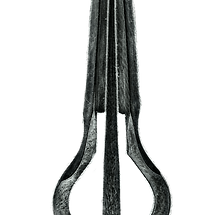
About the Author – Erik Turtev
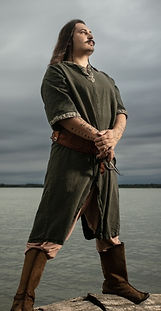
Erik Turtev – jaw harp player and founder of Varkocs
My name is Erik Turtev, and I am a jaw harp player from Slovakia, from the Žitný ostrov region where part of the Hungarian minority lives. I have been playing the jaw harp since 2011, and that same year I handcrafted my first instruments from bamboo and elderwood.
Since 2015, I have been performing with bands showcasing the jaw harp. In 2018, I founded my own jaw harp band, Varkocs. We arrange traditional jaw harp songs from various ethnic groups living in Slovakia — Slovaks, Hungarians, Roma, Rusyns, and others. Thanks to this diversity, the jaw harp heritage here is extraordinarily rich.
Today, we sing traditional songs in 4 languages in our unique 'hooligan folk' or folk-punk style. My mission is to share the ancestral jaw harp traditions and authentic music of this region with modern audiences worldwide.
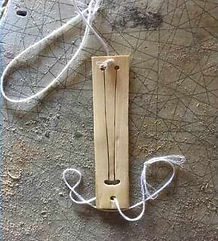
Vlastná remeselná výroba
Handcrafted jaw harp made from elderwood
Archaeological Finds in Slovakia
The two most famous jaw harp archaeological discoveries in Slovakia come from near the ruins of Hodejov Castle in the Gemer region. The first was found in 1962 by archaeologist Géza Balassa, and the second in 2013 during excavations in Širkovce.
In summer 2022, two medieval jaw harps dated to the 15th century from the Little Carpathians were added to my collection. In 2023, Hungarian jaw harp blacksmith Botond Bács created faithful reconstructions of both instruments.
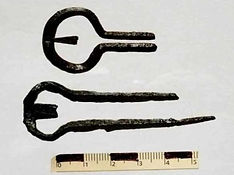
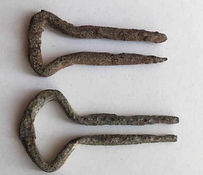
Note: Historical accounts suggest an ancient lyre-shaped jaw harp was found at Bratislava Castle, though direct pictorial or written records remain scarce.
Slovak Folklore & Traditions
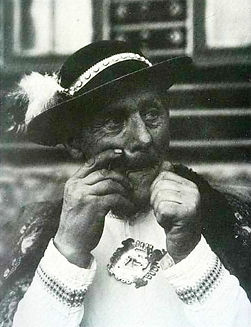
Folk records show that throughout the 19th and 20th centuries, jaw harps in Slovakia were predominantly forged by blacksmiths. Renowned makers included Juraj Kubinec (Utekáč) and R. Cibula (Zvolenská Slatina). Folk musician Matej Pitoňák (Ždiar) documented in the 1960s that young men would play the jaw harp outside girls' windows as part of traditional courtship.
Zaznamenané Terchovské skladby (1980)
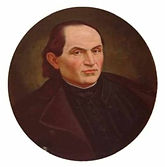
Andrej Sládkovič – Detvan (1853)
„By the cottage wall young Elenka rests,
looking into the darkened evening,
pressing the jaw harp to her teeth of pearl,
as her tender soul awakens.“
Detvan – Spomienka na dvorenie mladých prostredníctvom zvuku drumble
Hungarians in Slovakia & Strýko Nándi
In Hungarian folk tradition, the jaw harp originally possessed ritual character, played by herbal healers and shamans. In the 17th and 18th centuries, it was actually banned by decrees because authorities believed its seductive reverberations were irresistible to young women.
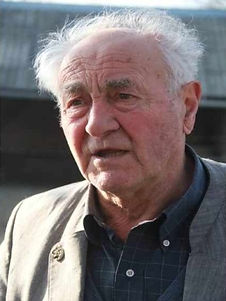
In 2018, I recorded the then-83-year-old Strýko Nándi in Blažov performing the traditional song 'Onnan felől', which became Varkocs' debut single.
Rusyns in Slovakia & Archival Recordings
From 1935 in Transcarpathia comes the archival song 'A Ja drymbu Kupuvala' (I bought myself a jaw harp) performed by Hafija Jerema. She was an extraordinary master of the instrument, leaving behind one of the most melodic and technically advanced jaw harp recordings in history. Varkocs arranged this nearly 90-year-old recording into our track.
Varkocs – A ja drymbu kupuvala (Transcarpathia 1935 / Hafija Jerema)
Captivated by the authentic sound of the jaw harp?
Discover traditionally forged and tuned jaw harps crafted by hand in our workshop.
VISIT THE E-SHOP